

The Short Answer: Why EA is Losing to CSP
If you are sticking with a Microsoft Enterprise Agreement (EA) for the “volume discounts,” that strategy expired on November 1, 2025.
Microsoft has retired volume-based discounts (Level B–D pricing) for Online Services. This means most enterprises will pay full list price while remaining locked into rigid, 3-year commitments. Transitioning to a Cloud Solution Provider (CSP) model is no longer just about “flexibility” – it is now the only way to avoid paying a premium for a legacy licensing structure.
The core shift: You are no longer paying for a discount; you are paying for rigidity.
By moving to CSP, you replace 3-year “true-up” lock-ins with monthly seat elasticity and specialized partner support that costs significantly less than Microsoft’s mandatory Unified Support.
EA vs. CSP: At a Glance
| Feature | Enterprise Agreement (EA) | Cloud Solution Provider (CSP) |
| Commitment | 3 Years (Rigid) | Monthly or Annual (Flexible) |
| Seat Count | Can only increase (mostly) | Increase or decrease monthly* |
| Pricing | Fixed, but discounts are vanishing | Competitive; pay only for what you use |
| Support | Mandatory Unified Support (Expensive) | Choice of Partner Support (Value-add) |
| Best For | 2,400+ seats with zero volatility | 50–2,000+ seats needing agility |
| *Note: Under NCE (New Commerce Experience), annual terms lock pricing, but monthly terms allow for seat reductions. |
Confused about Microsoft licensing? Read our Microsoft EA vs CSP comparison to choose confidently and see why CSP is better than Microsoft Enterprise Agreement.
Why Modern Enterprises are Abandoning the EA
The “benefits” of the EA have been hollowed out. Here is why the CSP model with a Tier-1 Direct Partner is the smarter play for 2026:
1. The Death of Level B–D Discounts
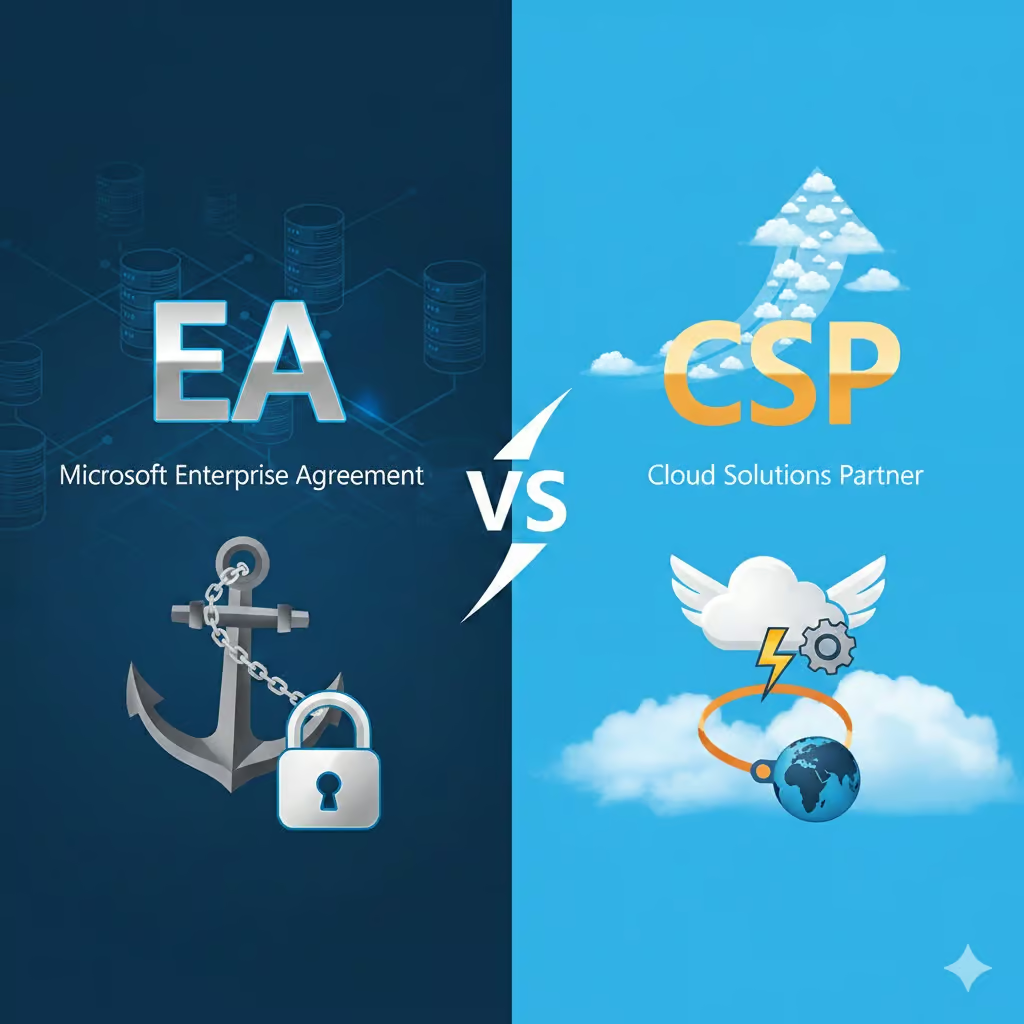
Historically, large organizations stayed on EAs to access Level B, C, or D pricing tiers. With those discounts disappearing as of November 1st, the EA becomes a “contractual anchor” – it gives you all the restrictions of a long-term deal with none of the financial upside.
2. Real-Time “Self-Service” vs. Annual “True-Ups”
Under an EA, adjusting your seat count is an administrative nightmare involving manual spreadsheets and annual “true-up” reconciliations.
If you lay off 10% of your staff or divest a business unit in Month 2, you are likely stuck paying for those licenses for the remainder of the year (or term). In the CSP model, seat counts are managed with much higher granularity.
- The CSP Advantage: Our Self-Service Customer Portal allows you to add, remove, and reassign licenses in real-time. You pay for what you use today, not what you thought you’d use six months ago.
3. AI Adoption & Governance (The Copilot Factor)
Purchasing Microsoft Copilot is only half the battle; ensuring your team actually uses it is where the ROI happens.
Deploying Microsoft 365 Copilot requires an agile rollout. In an EA, adding new product SKUs mid-term can be a contractual headache. CSP allows you to pilot 10 seats, scale to 100, or pivot licenses instantly based on actual adoption data.
Exclusive 360 Tooling: We provide an AI Employee Adoption Dashboard. Get real-time telemetry on how Copilot is being used across your organization so you can stop paying for seats that aren’t being touched.
4. The “Unified Support” Tax
EA customers are often funneled into Microsoft Unified Support, where the cost is calculated as a percentage of your total Office 365 and Azure spend. As your cloud footprint grows, your support bill skyrockets – regardless of whether you actually open more tickets. CSP allows you to decouple support from spend.
Checklist: Is it Time to Leave Your EA?
If you answer “Yes” to two or more of these, an EA is likely costing you more than it’s saving:
- [ ] Our organization has fluctuating headcount (seasonal or project-based).
- [ ] We are paying for Microsoft Unified Support but use our own internal IT or a third party for 80% of issues.
- [ ] We find the “True-up” process administratively burdensome and stressful.
- [ ] Our EA discount is currently below 5%.
- [ ] We want to use Azure on a “pay-as-you-go” basis without pre-committing large sums of capital.
The 360 Visibility Advantage: Why “Tier-1 Direct” Matters
Not all CSP partners are equal. As one of the few North American Tier-1 Direct Microsoft Partners, 360 Visibility provides a level of service that mimics (and often exceeds) a direct relationship with Microsoft:
- Direct Support Escalation: We bypass the “standard” queues. You get direct access to our experts and priority escalation paths via Microsoft Premier Advanced Support.
- Executive AI Strategy: We don’t just sell licenses; we provide AI Strategic Leadership to help executives align tools like Copilot with specific digital transformation goals.
- Flexible Billing: Match your cloud spend to your actual cash flow with monthly or annual billing options—no minimum seat counts required.
Task: How to Future-Proof Your Licensing
Don’t wait for your EA renewal date to realize your costs have spiked.
Bridge to CSP: Schedule a Licensing & AI Strategy Review with 360 Visibility. We will map your current EA usage and build a transition roadmap that eliminates “zombie” licenses and prepares your team for AI scale.
Audit Your Current Tiers: Check if you are currently relying on Level B–D discounts. If so, your next renewal will be significantly more expensive.
Review Support Costs: Calculate your “Unified Support” spend. If it’s a flat percentage of your total spend, you are likely overpaying.
Schedule Your Free Licensing & AI Strategy Review Today
Would you like me to run a complimentary EA-to-CSP cost-comparison analysis for your current seat count?
Schedule a free Microsoft License audit
